Recovery of the Herzoslovakian diamond
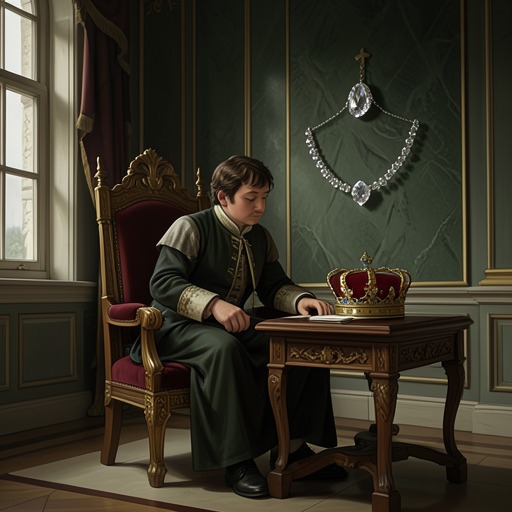
The Secret of ChimneysThe recovery of the Herzoslovakian diamond from the rose garden at Chimneys resolves the novel’s false-library-clue plot: Anthony Cade understands Count Stylptitch’s device as an image of a rose, while the story that the diamond lies behind books is his invention to lure Mademoiselle Brun into the open. The discovery turns a symbolic reading into a precise set of directions, and a buried package into a public, carefully staged handover.
The Rose as Clue
Anthony explains that Count Stylptitch’s device had originally stood for a rose. Once that meaning dawns on him on Monday afternoon, he goes straight to the rose garden. The crucial change is interpretive: the device does not point to the library shelves at all, but to a garden hiding place overlooked amid the searches of the house.
The location is specified by measurements from the sundial. With one’s back to it, seven paces straight ahead, then eight to the left and three to the right, bring the searcher to bushes of Richmond, a bright-red rose. The sequence makes the solution concrete and reproducible: a symbolic emblem becomes a route through the grounds, ending among living roses rather than behind books.
The False Library Lead
The library story is not a mistaken report of where the diamond lies. Anthony admits that it was an invention designed to trap Mademoiselle Brun. Its force depends on giving her a plausible destination and allowing her to act on it, while the real hiding place remains in the garden.
Hiram Fish has independently recognized the rose interpretation and watches from the terrace. He whistles when the psychological moment arrives, coordinating the deception with the surveillance. The false clue therefore serves both as misdirection and as bait: the diamond’s actual location is kept distinct from the location Anthony wants his target to believe in.
Anthony also explains that he and Fish established martial law at the Dover house, preventing the Comrades of the Red Hand from communicating with the false M. Lemoine. The impostor had sent them an order to leave, and word reached him that they had done so. Believing the obstruction cleared, he proceeded with his plans to denounce Anthony. The diamond trap is thus part of a wider contest over communication and access, not simply a search in the garden.
The Thursday Excavation
The recovery is enacted at Chimneys on Thursday morning at eleven. A police constable, Johnson, digs while the assembled friends and relations stand around the excavation. The scene is presented with the air of a funeral: George Lomax looks like a principal beneficiary, Superintendent Battle seems satisfied with the arrangements, and Lord Caterham wears the solemn expression associated with a religious ceremony. These ceremonial roles give the search a deliberately grave public face.
Fish interrupts the constable’s work with the assurance that the excavation has gone far enough. Johnson retires, and Fish bends over the hole with the solemnity of a surgeon preparing to operate. The comic shift in roles makes Fish the apparent family physician, but it also marks the decisive transition from digging to retrieval: the man who helped interpret the clue now reaches into the earth for its object.
Package and Handover
Fish brings out a small canvas package and gives it to Superintendent Battle. Battle, in turn, passes it to George Lomax. Each transfer is made with attention to the etiquette of the occasion, converting the find into a witnessed and orderly handover rather than a private discovery.
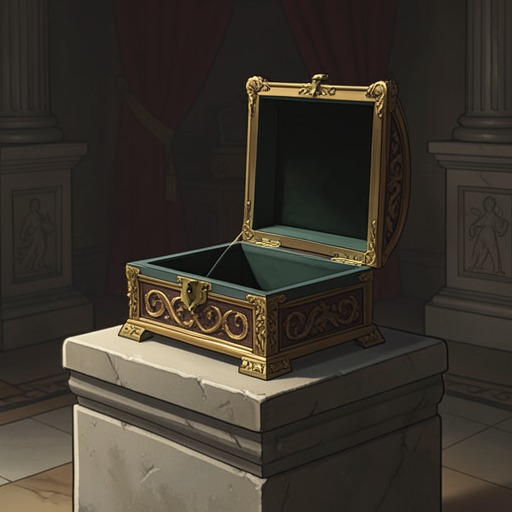
Lomax unwraps the package, cuts through the oilskin inside, and works through further wrapping. He briefly holds something on his palm, then quickly covers it again in cotton wool. The careful layers delay a full view even after the package has been recovered, but the handling confirms that the buried object is being treated as a valuable and fragile treasure.
Resolution and Significance
The find answers the question the searches of Chimneys could not settle: where the diamond had been hidden. The house had been ransacked, yet no one had thought to dig in the garden. Anthony’s solution depends on reading the rose device literally in its original sense, then trusting the overlooked landscape rather than repeating the search indoors.
The episode also completes the double structure of clue and counter-clue. The rose points toward the genuine hiding place; the library books supply a fabricated destination intended to expose the woman following it. Fish’s terrace signal, the controlled excavation, and the formal passage of the canvas package make the recovery at once an act of detection and a staged public reveal. The diamond emerges not from the place the plot has taught its pursuers to expect, but from the red rose bushes identified by the emblem itself.